Tuesday, May 23, 2017

Kindness needs a Reincarnation!

Okay people listen up, gear up! Yes I am talking to you, the person reading this blog, i wont lie, I really do hope there are a lot of people reading this. So people as you all know Ramzan is coming, or Ramadan as some of you like to call it. It is coming, in the middle of this brutal OMG you are killing me kind of summer, and very soon you will be bombed with everything Religious or Ramadan/Ramzan themed. For the faithful, fasting followed by the optional Tarawee Salah, for the not so faithful and devout, being forced to have your meals behind closed doors, keeping quite about whether you are fasting or not, and try to not  stand out for whatever XYZ reason. Yet both of you, yes both of you, a very large number of both of you are lacking in Kindness. Yes, I said it, among both of you, kindness is an almost extinct variable.

 Heads up, my blog will reek off a little bit of bias towards the visibly religious lot in particular, there is a reason behind this. I won't get into details, but what I will mention is that you visibly religious lot, certainly raise the bar of behavioral expectations that others may have off you and your new found piousness and fondness for spirituality, when that is really lacking, it adds to anger, frustration, anxiety along with severe disappointments. Then again you would blame us for having high expectations to begin, this is where i say cut the crap, stop making excuses, and stop hiding behind your religious attire u choose to to wear at your own free will. This is about kindness, kindness does not need an excuse.

Kindness is almost dead, its more extinct than the Dodo, sometimes I actually begin to wonder if we as a species have evolved properly, are we yet to get to the desired level of evolution or have we gone back a stage in the 21st century. Kindness needs a revival, it needs a reincarnation. The challenge I would like to throw both religious Muslims that will be fasting in this holy month as well as the non religious who would be continuing normal life behind closed doors, is to be kind to people around you over the next 30 days. Do you think you both can last a month without being unkind.

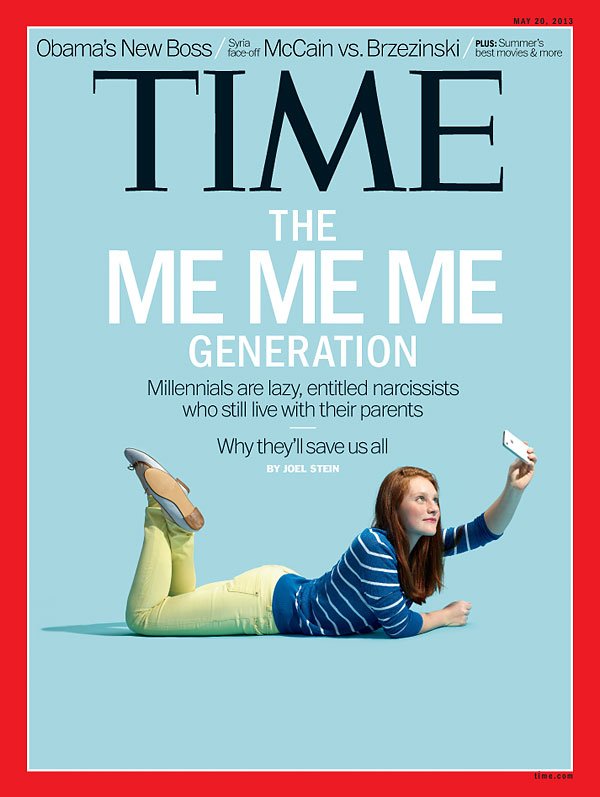
First of all let me make it clear, u may think you are avoiding being unkind to the other person, absence of deliberate cruelty or intentionally being mean is not being kind, but it is also a very damaging form of unkindness. Let me give u all an example to elaborate a little bit, lets say, you all need a small favour out of someone, or you want something done by someone, who u usually would not consider as someone who merits your time or maybe a lesser being owing the image u have in your head for whatever XYZ reason, ask nicely, ask in a kind manner, most people will still be accommodating even if they know their being used, least u can do is ask kindly, A little bit of kindness can go a long long way in making or shaping someone's life, you do not even have to do it beyond basic politeness and very basic courtesy, while a little bit of unkindness and cocky rude attitude can badly break some one. Most of us Millennials, be it the early lot that was born in the 80s or the later late born 90s and beyond, we are all living serious pressure cooker lives, though we broadcast a lot of shit on social media, there is a lot of things we can not share, some very personal stuff, it might be related to one's job, one's partner, one's family, one's health, the list is endless, so try and be Kind, it really does not take a lot of effort.


To make a stronger point, I will share an example from my own life. One of the months of 2016, I was fresh out of a broken relationship, was a borderline mess, took me a month or 2 to get over it and move on, but I decided to start the process of moving on within 24-48 hours. About a week after the unexpected demise of that I had a wedding to attend of someone I knew from childhood, at the proceeded with my usual Social media activity, those who know me, my usual wedding photos, including my signature wedding selfies of the crowd acting all natural in the back ground. One of the ladies who was not by design in the wedding photographs but purely because she was in the back ground, very rudely and obnoxiously in a very inappropriate like she owns me demanded I take down all evidence, absolutely all evidence of the wedding from my Timeline. Her Arguments as to why ''I know too many people, some one or the other will ask her how the wedding was'', she further added fuel to my inner rage by claiming I am ruining the wedding for the bride and the groom since they were selective in their guest list. If people see the picture, they will ask Qs over why they werent invited (all assumptions). The mental frame of mind I was in, I could have been a real mean person that point, I decided I needed to take a stand for myself without being unkind, so out of pure defiance, I uploaded one group pic intentionally and that on Instagram where the lady isnt one of my followers, not proud of that moment, but had to be done. I got to hear some foul language and swear words from that lady for daring to do something without permission, but at this point I do not care.

Anyways that's not the point of this, the point of this, be bloody kind to people around you, you do not know what their going through. If everyone of us makes a very tiny effort even to be kind and not at all be unkind to our fellow human beings, it can set off a small chain reaction, and the immediate world around us can be a far nicer place. A slightly nicer world, calmer nerves, better concentration at work, we can all sleep better, and best of all we will not be unnecessarily snapping at other people, who in turn will snap at others. So Give it a thought, my 30 day challenge to You, Be Kind Daily for 30 days, and see the difference you make.

If old TV shows and old movies can get reincarnated, why not kindness, so lets give it to a try..

Monday, December 19, 2016

Someone explain Relationships 101 to Millennials


Millennials, all right, let us get started with who or what this group is shall we? Well this group can be defined as individuals born from the early 1980's on wards, a very large number of them reached adult hood at the start of the new millennium. Think if you were born in 84, 85, 86, you probably turned 18 in 2002-4 and started life as an adult.

Some attributes of a lot of millennials, they have very high and rigid expectations of what they want out out of life,they are the generation that wants instant gratification, they are the right here, right now, I want this done yesterday type generation. They are very easily dissatisfied, and the very first signs of things not going their way, causes stress, anxiety, sinking feelings in the gut, panic, paranoia, which in turn results in severe difficulty to cultivate and manage relationships.

I am not an expert on relationships, but I do have a social science back ground, so let us begin by trying to decode millennial behavior and attitudes.

Millennials, God, I really wish they came up with a shorter word to describe this generation.

Millennials, are very very distrustful off other people, they do not trust their close friends, whom they label as close friends. Their is always the belief that every friend is a transitional friend and that their friends will not be there for them when they really need them. Most if not all millennials have probably experienced social betrayal from people they believed were their friends, its a deep down sinking feeling or belief among them that their friends will abandon them when they need them the most (for example going through  a crises) or move on to other people or other friends when something better comes along. This whole sense of distrust prevents people from taking a risk and trying to form meaningful relationships. Meaningful relationships take time, effort, patience, compromise and a shit load of hard work and perseverance.

 Relationships of Millennials are more like, first alarm bells, first whims, first random gut feelings, first thing they do not like in a relationship, or when things are not going completely their way, that is the end game, that is the deal breaker, that is when the decision to end relationships is made, swiftly, coldly, very brutally, and we do not even give the other person any form of closure. That absence of closure, in turn creates a cycle, where the person lacking the closure will make the  same mistakes in that relationship again and again, or will treat other fellow millennials in exactly the same manner assuming it to be a cultural norm, one that is widely acceptable. For the millennials, the concept of communicating , talking things through in relationships, and trying to come up with solutions to roadblocks or problems or challenges does not exist, and you know why they want instant gratification, their way or the highway. 


Okay so most social scientists and experts on human behavior till quickly throw the blame at social media, the age of Facebook and Instagram where we are all sucked into a comparative bubble, where we want a sense of association and approval from our fellow tribe, i.e. the other millennials and in that process we have a sense of dissatisfaction with what we want out of life, and what life gives us. We keep wanting more and more and more out of life, because we are surrounded with too much information about the different filters concerning other people's lives, maybe that is a very valid, but maybe it is not the only argument that can be put on the table also. We live in a world where comparison with the other is at the touch of an app away, so we are maybe always living in a feeling of relativity, the relativity to status quo of our peers. How many of us are happy for our peers, and how many of us are actually envious when good things happen in their lives? Just think about it for a moment.

Anyhow i wanted to bring to everyone''s attention another point, that we all millennials have experienced incompatibility with our environment and our upbringing. Being a millennial myself , I was told growing up that if you work hard, put in the effort, study effort, make it count, get the grades, get that degree from that fantastic university, your life is set, you will be well rewarded, that is kind of how things worked in the generation before us, our parents generation or those of us with siblings a decade or decade and a half older, but the reality of our generation is seriously different. For most organizations, it i all about the bottom numbers, profitability in terms of numeric, and employees are just a number that can be scrapped, shed to ensure profitability and cut costs. Those starting new jobs, instead of telling them what training they will be offered along the way, they are asked in interviews, what they can already do, they are expected to know everything from the moment they step into the post student era world, sometimes also in the student era world, as I got to learn the hard way at Graduate School in England. My own struggles off graduate school were  mainly due to my lacking of technical skills and knowledge that my degree required and the absence of social support.

To Sum up I would say, the solution to a lot of the problems, the stress, the crises millennials face, especially with regards to meaningful relationships is for some one to talk to them in a comforting manner, stuff like that all this is okay, sometimes these things happen, sometimes people are different, you have to make the most of it. But how are you going to teach patience to the millennial lot? condition them towards being patient, well i do not know the answer to that Question, if you do, drop some feedback in the comments section below.

Thanks for Reading

Wednesday, May 13, 2015

Book Review: Undying Affinity


I Came across this book as an Amazon recommendation. I found it very unusual that Amazon was recommending me a romance novel, I am not sure how Amazon's algorithm works, usually I am a reader of Non Fiction, however I am some one who has always encouraged Pakistani writers by reading and recommending their books. I always seek out fiction written by Pakistani writers, be it by more well known writers like Kamila and Mohsin, or the slightly lesser known one's like Saba Imtiaz and Shazaf Fatima Haider. Our English language writers alongside their Urdu language counter parts are very talented and have tremendous potential to impress their readers.

I was initially skeptical of this book, firstly it being a romance novel and secondly the author's very young age, also the Amazon sampler before downloading the book did not impress me so much. The first chapter or 2 that you can read as part of the free preview slightly disappointed me with  a slightly under developed use of good quality vocabulary, there were moments when it felt the English language wasn't freely flowing as it should. But then again it is the author's debut novel and unlike her fellow Anglo Pakistani writers does not come from a back ground where she holds a degree in English or Creative writing so I decided to give her the benefit of the doubt and downloaded the book.

The book is about a young early 20's something girl named "Zarish" who hails from an upper middle class business owning family in Lahore. She is no different from any other girl in her age group, living a laid back care free life style that involves going to University, socializing with friends and just taking life easy. We are introduced early in the novel to her childhood best friend, a young man by the name of Haroon, who she has grown up with and has spent the most time. Their parents always assume, that their close friendship will blossom into love and eventually marriage.

 It seems everything is going according to a standard scrip, this is until one evening while she is out with her friends for dinner, she has a by chance bumping into some one who unknowingly to her would change her life in the weeks and months that were to follow. That person being "Ahmer Murad", a young man in his late 20's who has returned to Pakistan leaving behind a life abroad to be with his ageing father. Little did Zarish know that the man she had an brief interaction with at the restaurant would be one of her professors and mentors at the university in the coming semester.

Considering the embarrassing nature of their first interaction, Zarish is shown as some one who is drawn to her professor's good looks as well as engulfed in a sense of discomfort whenever she sees Ahmer Murad around. It doesn't take Ahmer long to develop a good bond with his students, as he becomes a much loved instructor at the university with students showing significant interest in the finance class taught him. As the semester goes by, circumstances move in such a way  that the amount off out of close interaction between Zarish and Ahmer increases and they see a side to each other beyond the teacher-student relationship, they start seeing each as the other person behind the curtains with a glimpse into their lives and how their families have crossed paths in the past.

As their paths cross more and more, they start developing a friendship that involves a trusting relationship as well, which blossoms into love with Zarish being the first one to confess her unconditional love to Ahmer and the 2 are left with hard choices, some moral self questioning about going beyond a student-teacher relationship and the challenges, some expected and some unexpected that will test them and tear them apart.

There are many beautiful moments in the book, many intimate moments shared by Zarish and Ahmer, such as the first time Ahmer confesses her love for Zarish, and the first time they kiss. The chemistry and bond shown in the book between Zarish and Ahmer reflects the innocent nature of our two characters which if you ask most people is a dying trait one rarely finds, that makes it the book's unique differentiating point that it is a simple innocent love story with innocent characters whose love is tested by norms, limitations and tragedy. Saying anything further would be spoiling the book for would be readers, I highly recommend it, especially if you are under the age of 25. For her debut novel Miss Naveed has done a very good job and I look forward to reading her next book.

I am giving the book 4 stars, because of some minor short comings in the book, such as the quality of English used in some of the earlier chapters is not off a very high standard, secondly the writer has not made use of the odd humour that some writers use to keep their audiences engaged in the book this may bore some readers though personally I did not experience boredom while reading this book and thirdly the length of the book was almost 400 pages, an ideal book in South Asian literature should be under 300 pages, their were some things that seemed like repetitive in the book and could have been left out, while some minor characters were not given their due justice and coverage. It would have been nice to know a bit more about Ahmer's past in particular especially his youth.

I wish Sara Naveed all the best in her future works, I am already eagerly awaiting her next book. For those in Pakistan this book has not been officially launched nationwide, it is available on the Amazon Kindle if you are a Kindle user, alternatively you could contact the writer on her Facebook page and order a paper back (In Pakistan) with an option of Cash on delivery. For readers in Karachi, not yet available at Liberty books. 

Tuesday, April 7, 2015

Travel Diaries: Choose your Travel Companions Wisely

The desire to travel, Wanderlust, is inside so many of us, so many of us yearn for that freedom that travel brings along with it. This is in addition to the many wonderful things that travel enables us, it gives the opportunity to unwind and refresh, explore new culture, meet people and also taste some great food along the way. Some of us feel that freedom as solo travelers, while some of us love to have company around while we travel and can never even imagine getting on that plan and visiting some place new without companionship. The benefits of solo travel maybe plenty, such as freedom and flexibility to do whatever when you want, while traveling in a group or with friends, comes with benefits such as better bonding between you and your travel companions, you always have some one with good fresh ideas, some one to talk to, and not to mention of course some one to take that all important photograph in front of a landmark, which was previously not possible before front facing camera's in mobile phones and of course the horrible invention the selfie stick. I wish the latter would just get uninvented some how. There was an April fool's day joke about the Selfie Shoe coming up, boy did that cause quite the stir.

Coming back to the main essence of this blog, travel companions, I can not for the love of God emphasis enough that one must choose their travel companions wisely. Sure it sounds great to be spontaneous and make a random holiday plan with a friend, but traveling together could make or break the bond in pretty much the same way living together can also make or break a relationship. The following are some things that you need to be mindful off before going on a trip with some one, unless ofcourse their your significant other than most stuff gets completely overlooked.

1. How close are you to that person, and to what extent can you really trust that person? Have u had a history where at any point trust issues, mutually or from a single side did sprout up?

2. Do routine habits and life style choices of the person you travel with annoy you or at all make you comfortable? For many after a certain age habits and life style choices are some what fixed and no power can undo that. If your even mildly uncomfortable, it would be best to avoid traveling with that person. For example for some Muslim travelers, eating only Halal is a priority, while for some it isn't. Even though it is not a big issue, it is a cause of discomfort for many Muslim travelers when their fellow Muslim travelers are not big on Halal.

3. Alcohol consumption. In most parts of the world alcohol consumption as a social lubricant is second nature to people, kind of like having tea in some parts of South Asia, so if this social lubricant causes you discomfort, plan your way of meeting and bonding with people alternatively. In the case of your travel companion, do learn about their alcohol consumption habits, do not judge them over drinking, but if they are a good friend please facilitate them in keeping consumption to a moderate level.

4. Never ever travel with some one who takes pleasure from lighting a match, we all have atleast that one friend who loves petty gossip and lights matches for that petty gossip, it gives them a feeling of power over the other person. Lighting a match and rubbing salt on old bounds under the guise of no one else being around. On that note, never travel with some one who has a history of breaking your trust even once, unless of course they have mended all the bridges involved.

5. Never travel with any one who has bad hygiene. That one is obvious, no need to go into details.

6. Never travel with some one who has a history of being reluctant to share. While on traveling, it is not uncommon for you to forget some stuff in the hotel room or forget to pack some stuff in the luggage. Personal hygiene stuff like tooth brush apart, If your travel companion can not share with  you stuff such as let's say a mobile phone charger or a universal adapter or even toiletries such as Shampoo or Sunscreen, yeah the holiday won't exactly go according to plan.

7. Do not travel with some one that does not respect you enough to let you have a say in your holiday, it is best to avoid travel or part ways early with a travel companion who is always bossy, and tries to dominate how the holiday should proceed, from landmarks which need to be visited, from places for food, some one who doesn't cooperate with u slightly to put it simply. Last thing you want to do is get into a fight.

Just Some Food For Thought, Speaking from personal experience

Happy, safe and memorable travels every One.

We Need To Talk About Bullying (Part IV)

It must be extremely difficult being a teenager today, I am sure no matter how hard I try I really can not imagine the true extent of what young people today have to go through. Today I am talking about bullying again, because it is a topic that needs to be spoken about as much as we can because bullying isn't declining but thanks to developments in technology and social trends it is going out of control and out of proportion. We live in an age and era where offline bullying is now accompanied by digital bullying which makes things a lot worse than they already are.

Some weeks ago, it was early in the morning and I had switched on SBS in my Melbourne hotel room. SBS Australia is one of the few free to air TV Channels alongside 7, channel 9 and the ten network. They were running a program on how bullying in the digital age is effecting children particularly teenagers leading to an academic, social and emotional down fall of the next generation of young people walking towards adulthood. According the documentary the attention towards the impact of digital bullying was first noticed in many high schools with a decline not just in grade work of young students but also a significant decline in their push towards physical fitness and athletic agility. Having personally lived in Australia for 4 years I personally know the importance on good physical health, fitness and a good active life style put forward by most Australians. This is also reflected upon the agility and competitive mindset of their athletes and sports persons. In Olympics Australians always feature in the ten best performing nations in terms of medal counts, while in other sports such as Rugby and Cricket, their a force to be reckoned with.

The documentary that I was fortunate to see was set in urban Queensland, where PE or Physical Education teachers or instructors noticed a decline in confidence and a drop in motivation for being competitive towards physical activities such as sports and fitness during the school hours. Upon investigation it turned out that students who were terrified off showing their potential or making daring efforts to exert themselves in physical challenges had become conscious of themselves, their bodies, their physical appearances as a result of not just real time bullying, but a lot of digital and cyber bullying that they had to be subject to. Aggressive comments like 'O Shes a Fat Cow' or 'He is a Fat Pig' or 'He/She is a midget' were being labeled at them by their peers, and thanks to the power of social media, they had been going viral and had played a great role in shaping opinions of others who otherwise wouldn't have had any. Long gone are the days, when the bully was out of your face, you did not have to think about the bully or attempts of bullying, now considering everyone as a smart phone and easy access to social media, it seems their is no escape. Young people today are always subjected to bullying. With limits to how to manage what goes on in the world of social media, it will become even harder and harder for parents as well as teenagers to manage circumstances.

Realistically bullying could never be prevented, bullies have existed since the dawn of civilization, technology has just presented everyone with a whole set of new challenges no one ever expected. One thing that can be done is to create awareness among people as how to identify bullying when it happens and what to do in what circumstances should they be on the receiving end of bullying or on the spectator end. Part of the problem lies with people's apathy, this I was witness to when I was in school, and I witness this in the lives of young people today, its the apathy of by standers, witnesses, who not only fail to even blink an eye when they see some one being subjected to bullying, but often at times, they take the side of the aggressor and entertain the idea that maybe the victim of bullying is some one who actually deserves the treatment thrown towards them. We see it as a natural course, a natural order, we see the aggressor from the vantage of a first mover, the first mover is well within his or her right to act and must be acting right, we seem to automatically dismiss alternatives. The dismissal of alternatives comes down to our inability to feel empathy for other human beings, realistically it is impossible to feel absolute empathy for another or be absolutely sensitive as to feel for the other person, but it is totally worse on a whole different level we see the victim of aggression as a lesser being than the bully or the aggressor. It is no different from how we look down upon victims of abuse, back of our mind we want to be impartial, so we end up making things worse by giving even some benefit of the doubt to the aggressor. There can be no 2 ways about it, an aggressor is an aggressor, some one who makes the must move must be in the spot light.


When was the last time so many of us actually took a stand for some one getting beaten, harassed, socially ostracized or character assassinated because of one or just a handful of people. Standing up is far fetched, I haven't even seen people show compassion for the person getting bullied, even compassion is far fetched, I have seen people believe the image of the victim as portrayed by the bully as some one who deserves it. Just some food for thought for everyone, considering we live in a digital era, next time any of us is witness to digital or cyber or social media bullying, we should entertain the idea that okay maybe this is not right, and maybe the bully is wrong and not their victims.

Just Food for Thought. 

Saturday, September 6, 2014

Let's Talk About Bullying Again (Part 3)


Fairly recently I came across this little piece on the internet about Disney's Beauty and the beast which is a childhood classic for many and one of their great animated hits from the old days.Though personally not a fan of the popular children's tale, it gave insight into the story in a way a great number of us who have seen it in our childhood would have not observed. Seeing and observing something from the mind of a child differs significantly from how we see, perceive, feel and react to things as an adult. This little piece online gave quite some food for thought about the deep messages hidden between the lines, how there is more to a simple children's tale which we had seen many many years before any hint of adulthood wisdom kicked in. That little piece talks about bullying and social discrimination in a manner that makes it an important highlight of the children's animated film.

The film highlights how damaging bullying can be and the consequences of bullying, not just that but also some of the other types of bullying that takes place, and how we as a collective lot do not reject bullying, instead of we go an extra mile and glorify bullying behavior. There is a character called Gaston in the film that everybody developed a disliking for as he was seen as a non friendly character, but what the film also suggests and this is from the above link itself, that the character demonstrates that bullies are rewarded and beloved by society as long as they possess certain characteristics, while nice people who don't are ostracized. Even the love story itself is about two individuals who find comfort in one another after society rejects them.

The character of the beast and his outbursts of anger are also an important backdrop of the film. His anger is not because he is a monster, but because of society's attitude towards him and their decision to socially ostracize him by convincing him time after time that he is indeed a monster not worthy of social acceptance. See this here itself is a very important lesson from this Disney animated film, there are very deep psychological consequences of society's behavior towards a certain individuals who by their own circles are deemed different from the lot, especially if it is different in the wrong kind of way. By reinforcing the belief that one is a monster or sub human or in any way in a relatively inferior human being, society particularly the active self serving pricks are pushing one towards the belief that they are indeed human or simply put not EQUALLY HUMAN.

The Concept and idea of being equally human is an interesting one, there has been much debate on this in academic circles and their publications, but stimulating and productive discourse on the topic rarely takes place among standard social settings. People in society usually display such treatment towards not only those that are different from a standardized lot but also those deemed relatively inferior, and the way we have seen such behavior depicted in popular culture, it initiates with the work of self serving trouble makers, who would benefit directly or indirectly from the mistreatment of another And like its highlighted in the Disney article, these trouble makers are usually very conveniently ignored as trouble makers and are seen as fairly right people and fairly rightful in their approach because of certain characteristics they all possess. No one even remotely entertains the idea these trouble makers maybe the one's'who are really different because the general rule of thumb is good folks do not try and build hatred for others. It is these very people that lead others on as well to follow them into a web of hatred, discrimination and demonize they the others.

Examples are widespread in Pakistan, it is usually one person or a small group of people that incites provokes and gathers a mob against minorities, against law enforcement agencies and functional government institutes. These include acts of violence and persecution towards religious minorities such as Qadiyani' and Christians in Punjab and Hindus in Sindh. It also extends to include the trouble makers from BSO Azad at Universities across Balochistan in their personal feud with the state.

But let's look at it from a more micro perspective leaving behind political or religious or any other controversial elements to this debate. Early basic, primary and secondary schooling or education are the basis for behavior that shapes people as they move into adulthood. It is in these years that such behaviors are ingrained, conditioned or taught with respect what is acceptable and what is unacceptable. Not everyone we went to school with has a standardized life map like a lot of us. Every child in school in the early years or as a teenager in the later years are a product of their environment, upbringing and their realities of life. Some of our fellow classmates are the only child, some come from broken families, some come with the baggage of trauma from abuse, some come from an over protective or overly ignored upbringing, some from very competitive and high expectation backgrounds, quite a few variables.

We all remember our schooling days of how there were always other children who were brutally picked on and they were the children picking on them, most of us were silent  restrained observers. In true essence we in our minds were actually condoning bullying behavior firstly by not only showing apathy and restrain from preventing a conflict (for whatever reason) and secondly by looking down upon the victim of bullying, harassment and discrimination as an inferior being, some one whose ill-treatment is justified. In a way we are reinforcing bullying by justifying it, we are reinforcing the belief that victims of abuse and mistreatment do not belong and they need to be rightfully put in their place. When was the last time, either of us dared to get up and question the bully or question the acts of bullying?


To Be Continued.....

Tuesday, August 12, 2014

Are we really good and socially responsible friends? (Originally published April, 2011).

There is a question that has been on my mind for quite some time. That question has been what distinguishes our friends from our peers, and should we practice social responsibility towards our friends ? At times, there are many people who can not distinguish between their friends and peers, though the definition of friendship varies from how the world describes it, definitions of how we define our peers stay some what the same. I remember once picking up a sociology textbook that first year university students use for intro to the subject and came across a textbook definition of what a peer is. Based on that text book, our peers are defined some what as people we know, we get along with and people we socialize or interact with. Sounds like the definition of a 'friend', but surely friendship and friends carry a different meaning, otherwise the two words would not be in existence or would be merely used inter changeably.

Friendship in order to distinguish itself incorporates characteristics that differ from those we associate with our peers.  Friendship incorporates additional values such as empathy, honesty, mutual understanding (which is common with peers also), trust, positive reciprocity as well as an element of social responsibility. The social responsibility that I speak off comprises of only not only how socially responsible we are, towards our friends, but also how pro active we are in instilling  a sense of social responsibility in them, whether that social responsibility is towards other people they know, or the wider community at large. In other words, a socially responsible friend is one who is not only a good, reliable and responsible friend towards us on an individual level, but is also one that communicates a sense of socially responsible behavior in us. One might argue that as mature adults, many of us are capable of thinking independently on our own and be in a position to distinguish between right and wrong, and that we do not need our friends or peers or who ever to be telling us what to do and what not to do, what is right or what is not? These are some of the countless arguments that one can expect people to give.

To put it simply what I am really trying to say is that what distinguishes our friends from our peers is that they are not reluctant to re assure us when we are correct, yet at the same time neither are they reluctant to criticize us or condemn us when we are walking down the wrong path or following a set of behavior or actions that are questionable, socially irresponsible or even just down right wrong. It is human nature, that we through out the course of our life, especially during early adulthood, we want a sense of continuous assurance from people in our lives especially those whom we see as our friends, with regards to what our plans in life are, and what course of action we choose to follow.  We want people, who we see as our friends to unconditionally support us regardless or whether we are right or wrong and/or look the other way when we are doing something wrong. Though different people have different thresholds for criticism coming from others, when it comes from our friends, or when our friends tell us what we are doing is wrong has an entirely different effect on us. One possible reason for this could be a level of emotional connection that we have with them, a sort of memorandum of understanding that has been built over time. Has it ever occurred to us, that it is only our friends who will communicate this to us, if we are genuinely truly doing something wrong, while our peers would not even think twice about what we are or are not doing?

Why is it that we forget that is our friends and not our peers at the end of the day, who come to our aid in times of need, in times when we are at our worst, times when life turns it's back on us and not necessarily the people we socialize with. So why should be reluctant to listen to our friends when they are giving us genuine advise and most importantly why should we hold ourselves when our friends are doing something wrong. It is not uncommon that we over the years growing up, witness our friends do questionable things before us, even though it might cause us minor disappointment deep down inside, out of possible fear of repercussion or loss of acquaintance holds us back. How many of us have seen our friends cheat in final exams, break the law, bully, abuse, harass and carry out targeted discrimination towards others. How many times, have we seen our friends use and exploit others, how many times have we seen our friends mistreat others, how many times have we seen our friends become victims of drug and alcohol abuse? How many times have we seen one friend of ours mistreat and exploit another friend? How many times have our sense of favoritism amongst friends cloud our objectivity and social responsibility? Just How many times?

One of the most famous human rights activists of the 20th Century, the late Martin Luther King Jr who led the famous civil rights movement in the United States once said ' Our lives begin to end the day we become silent about things that matter'. If we look back and reflect on life, the frequency of us witnessing such events over our lives would be substantial. We should take this opportunity to reflect back on just how good of a friend have we been to our friends and how often have we been silent where we should say something